Welcome to TANZIE at CUHAS
The "Tanzania Internationalization Strategies for Higher Education (TANZIE)" aims to strengthen the internationalization efforts of selected Tanzanian Higher Education Institutions (HEIs) through institutional development that enhances the quality of teaching, research, and international collaboration.
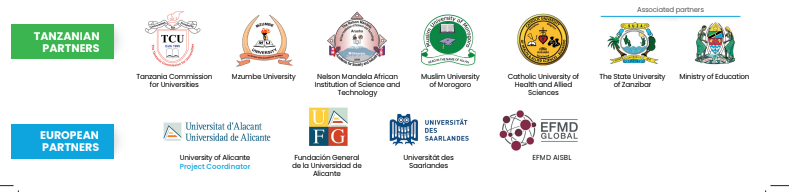
TANZIE is a European Union funded Erasmus+ Capacity Building in Higher Education (CBHE) project championed by the Tanzania Commission for Universities (TCU) in collaboration with European partners: Alicante University – Spain and Saarland University – Germany.
CUHAS is a proud beneficiary of this project, along with Mzumbe University, Muslim University of Morogoro, and Nelson Mandela African Institution of Science and Technology.
Project Specific Objectives
- Enhance the institutional capacities of Tanzania HEIs to effectively plan, implement, and evaluate internationalization initiatives, including the development of strategies and international offices.
- Foster intercultural competencies among faculty, staff, and students contributing to a globalized learning environment.
TANZIE Implementation at CUHAS
- Establishment of an International Office to ensure sustainability of project outcomes and drive the internationalization agenda of CUHAS.
- Capacity building for CUHAS staff through targeted training programs aimed at improving management knowledge, research skills, and international engagement.
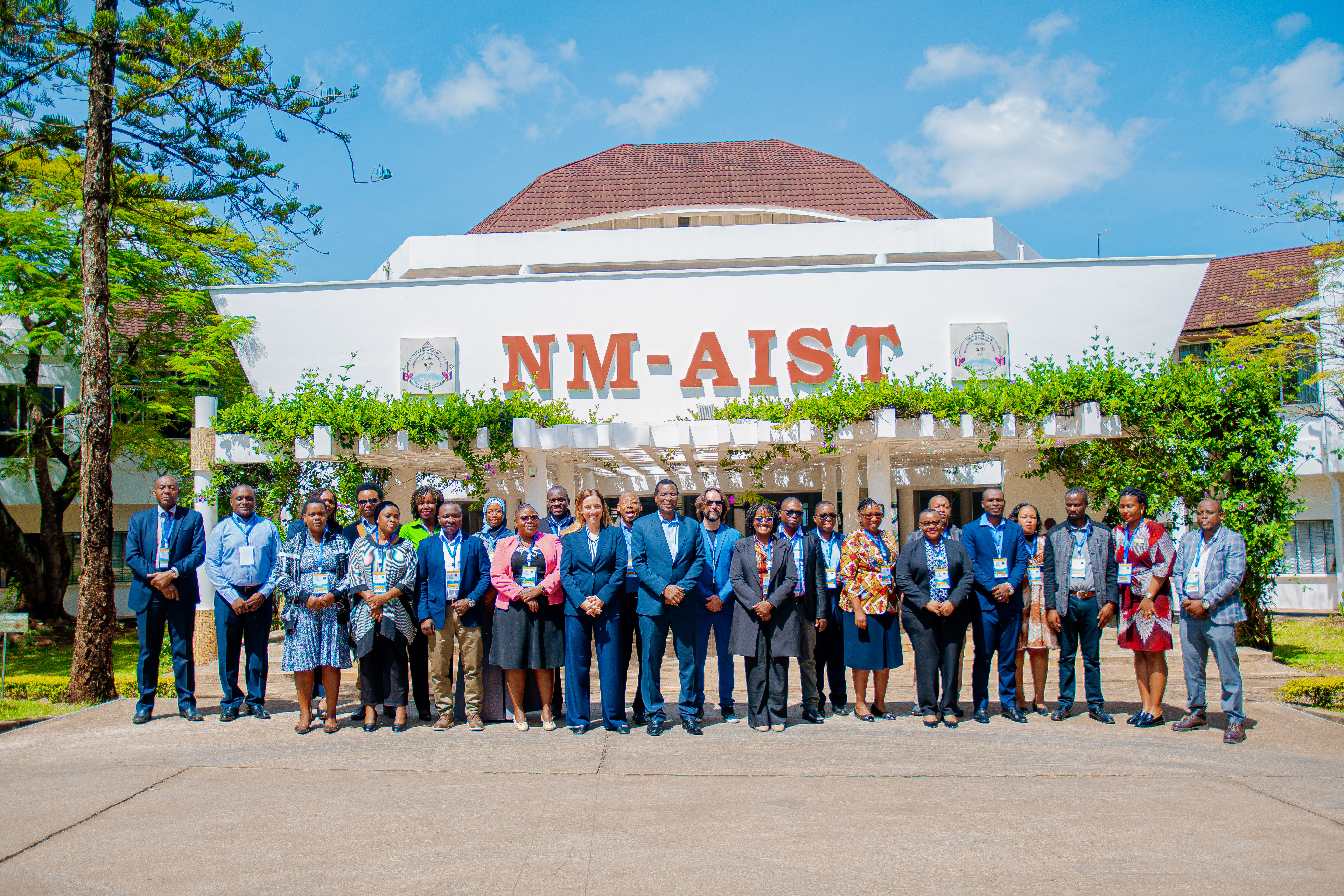
TANZIE PROJECT STRENGTHENS INTERNATIONALISATION CAPACITY OF TANZANIAN UNIVERSITIES THROUGH TOT TRAINING IN ARUSHA
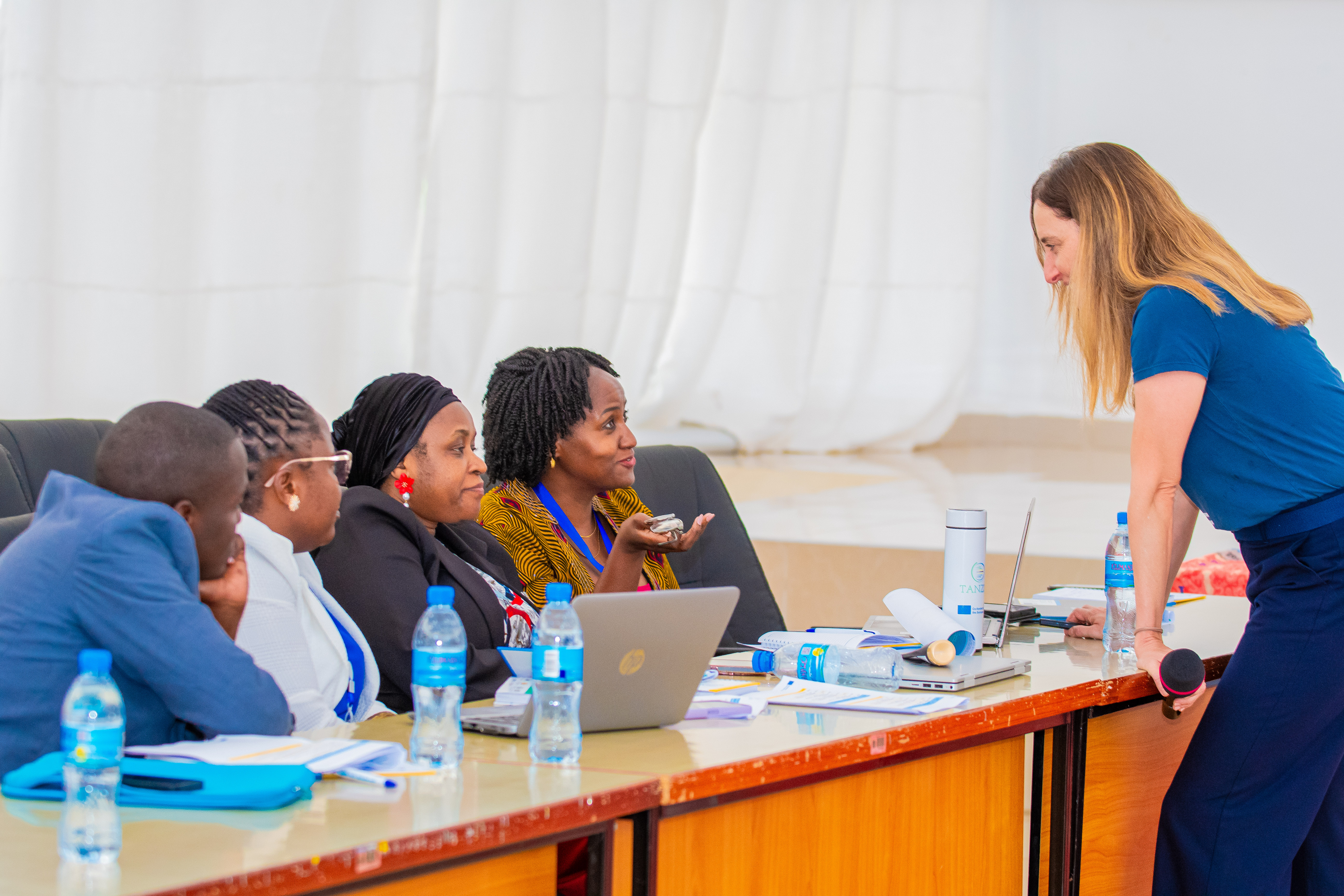
TANZIE PROJECT STRENGTHENS INTERNATIONALISATION CAPACITY OF TANZANIAN UNIVERSITIES THROUGH TOT TRAINING IN ARUSHA
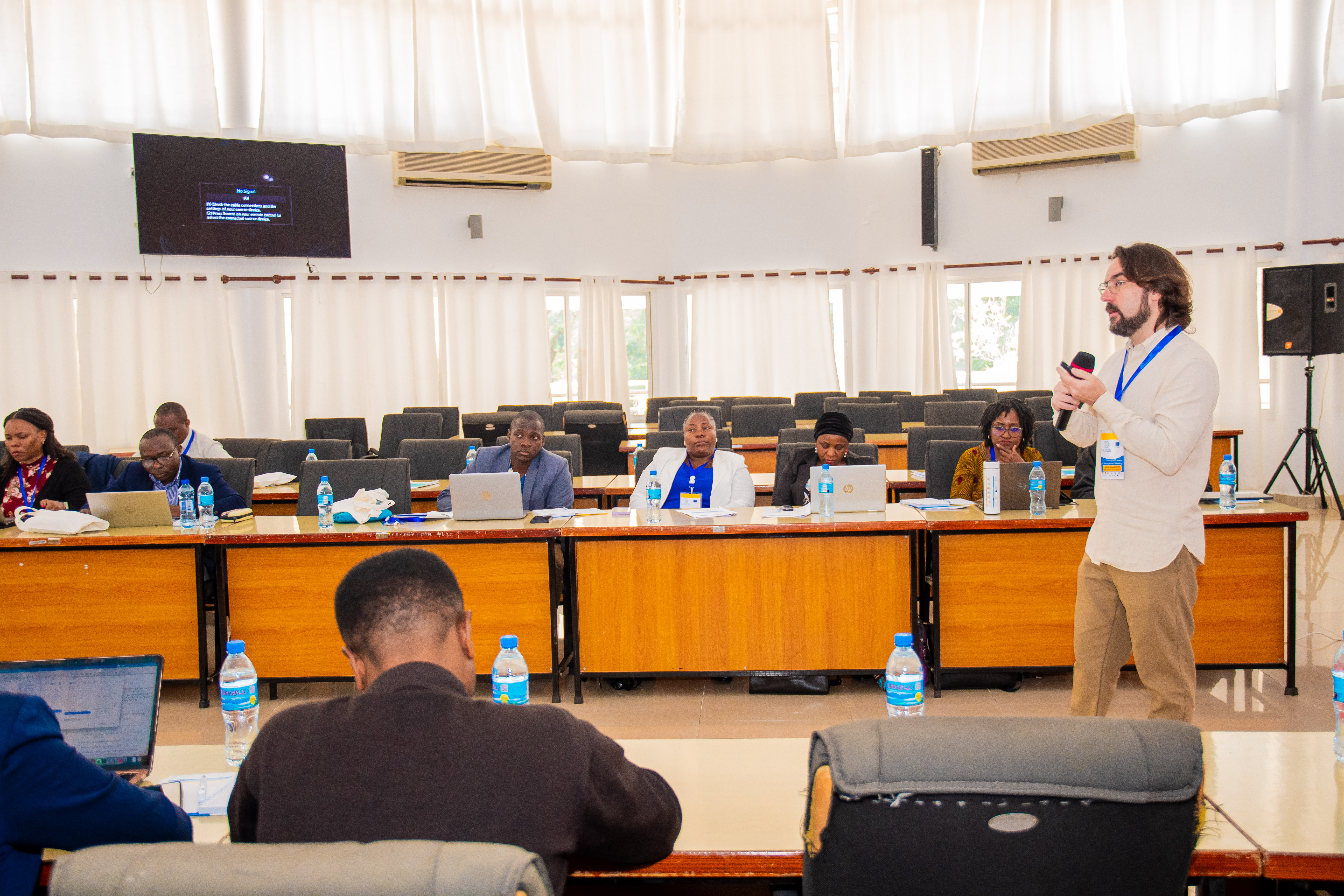
TANZIE PROJECT STRENGTHENS INTERNATIONALISATION CAPACITY OF TANZANIAN UNIVERSITIES THROUGH TOT TRAINING IN ARUSHA
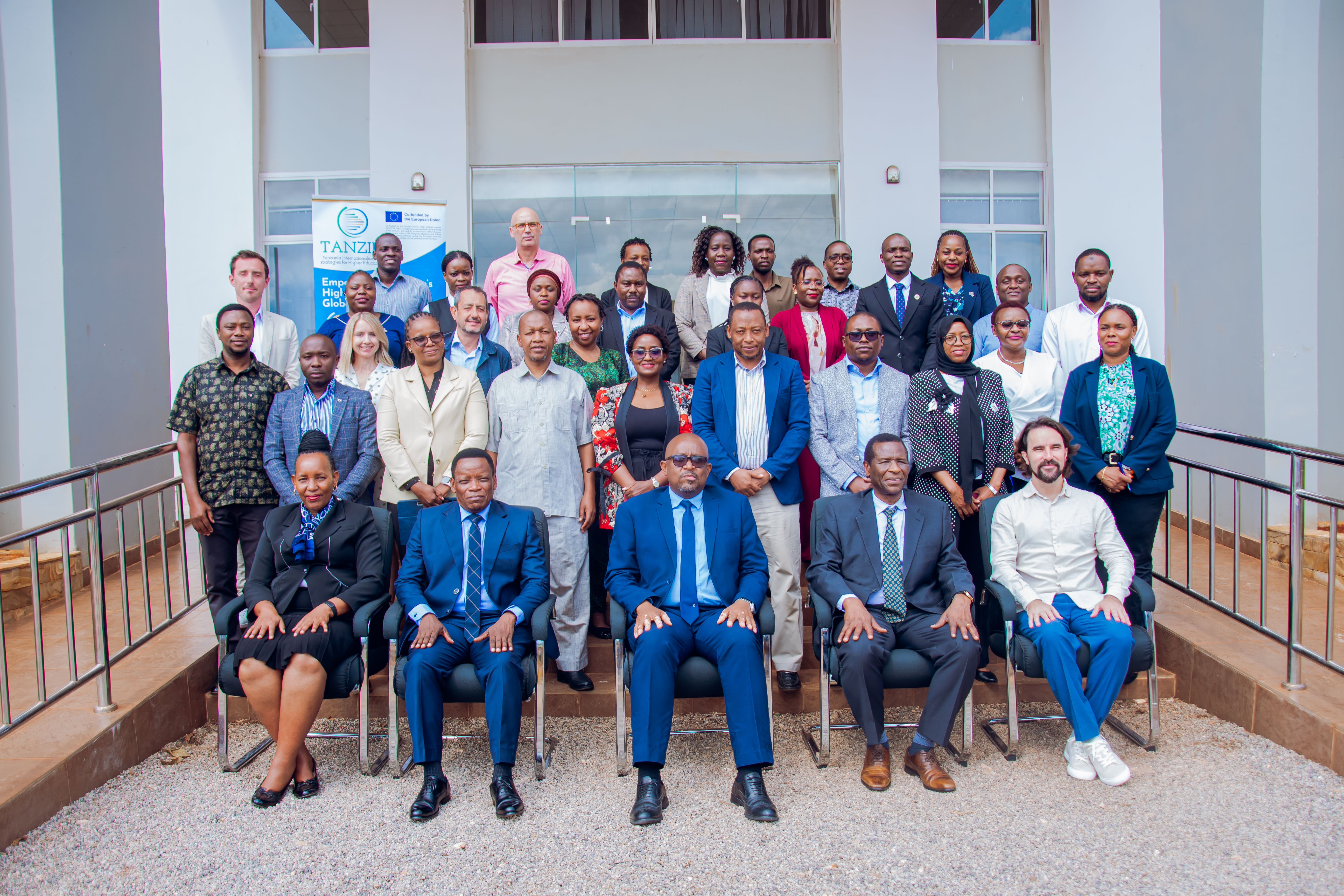
TANZIE consortium partners at Mzumbe University For The ToT Training and Management meeting
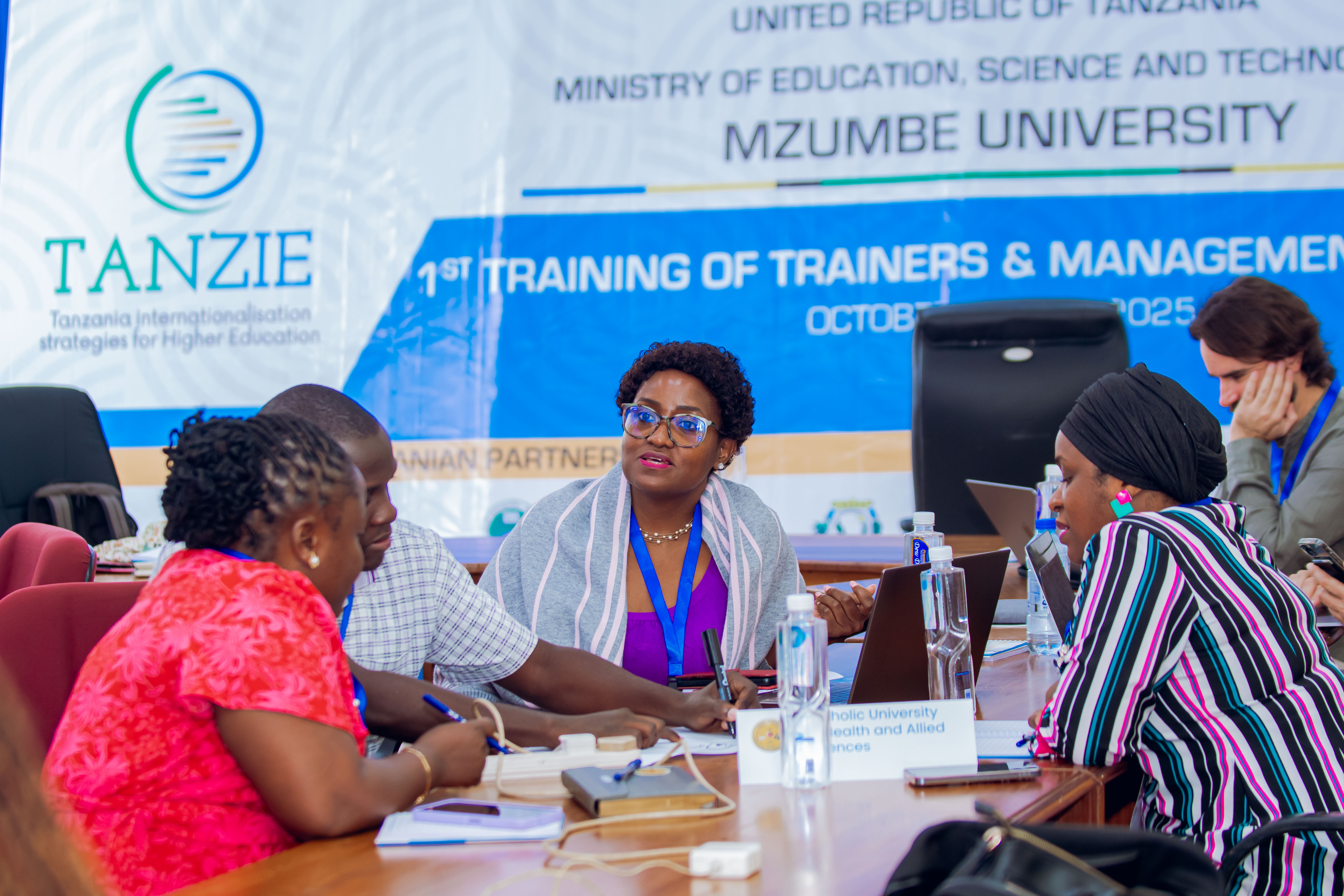
Building capacity for internationalisation in higher education institutions
Delegates exchanging experiences on best practices in HEIs.
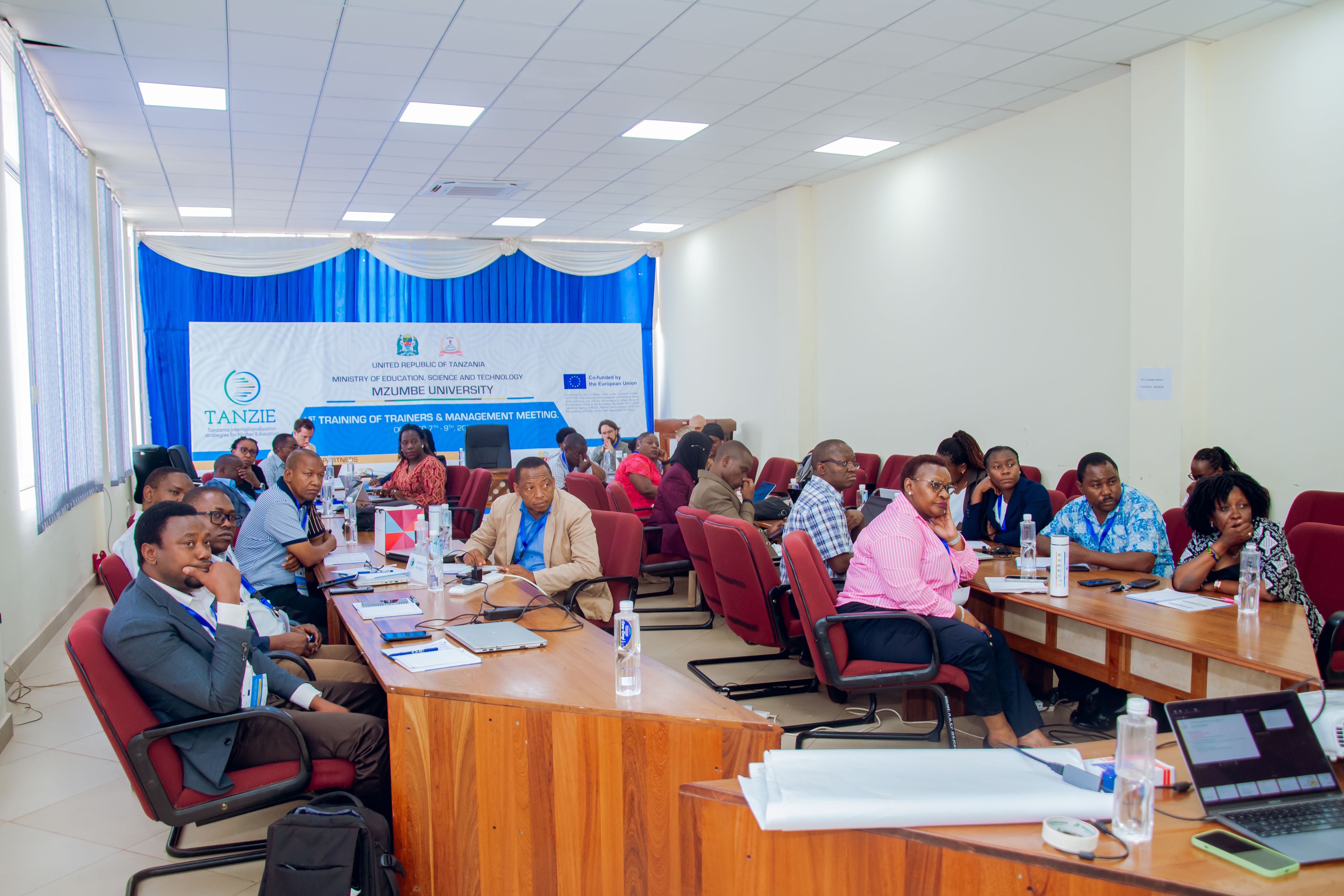
Workshop Session
Training of Trainers Workshop under TANZIE (7th–9th Oct 2025, Mzumbe University).
Project Highlight Videos
Project Partners
TANZIE in Action at CUHAS: Partners Deepen Capacity for Quality and Global Engagement
The First Training of Trainers Workshop under the Tanzania Internationalisation Strategies for Higher Education (TANZIE) Project (2025–2028) took place over the course of three days, 7th to 9th October 2025, at Mzumbe University in Morogoro. The three-day workshop brought together Tanzanian and European partners, namely the Tanzania Commission for Universities (TCU), Mzumbe University (MU), Nelson Mandela African Institution of Science and Technology (NM-AIST), Muslim University of Morogoro (MUM), and the Catholic University of Health and Allied Sciences (CUHAS), alongside European partners: University of Alicante (Spain), Saarland University (Germany), and the European Foundation for Management Development (EFMD). The event was officially opened by the Executive Secretary of TCU, Prof. Charles Kihampa, on 7th October 2025.
The objectives of the workshop included building capacity for internationalisation in higher education institutions, focusing on the fundamentals of internationalisation, mobility programmes, assessment of the quality of internationalisation, fundraising, and the development of strategic action plans.
The training marked a significant milestone in Tanzania's journey toward strengthening institutional capacity for internationalisation in higher education. Funded through the Erasmus+ Programme, the TANZIE Project provides a dynamic platform for collaboration and knowledge exchange between Tanzanian and European universities committed to advancing quality, inclusion, and global engagement in higher education.
Throughout the workshop, participants engaged in a series of interactive sessions designed to build a core team of national trainers who will champion internationalisation practices within their institutions. The sessions also focused on strengthening quality assurance mechanisms and developing institutional strategic action plans aligned with the Sustainable Development Goals (SDGs), particularly Goal 4 (Quality Education) and Goal 17 (Partnerships for the Goals).
The closing ceremony concluded with participants presenting their draft institutional action plans, which will guide their respective universities in implementing effective internationalisation strategies and advancing the broader objectives of the TANZIE Project. The workshop's success marks an important step toward fostering sustainable international partnerships and positioning Tanzanian universities within the global higher education landscape.
The Vice Chancellor of Mzumbe University, Prof. William Mwegoha, officiated the closure of the three-day workshop. In his remarks, Prof. Mwegoha commended the participants for their active engagement and dedication throughout the workshop. He emphasised the importance of collective action and sustained partnerships in transforming higher education institutions into globally competitive learning environments.
Prof. Mwegoha also highlighted that the outcomes of the workshop reaffirm Mzumbe University's dedication to its long-standing motto, "Let us learn for the development of the people." He reflected on Mzumbe University's enduring collaboration with the University of Alicante, which began years ago through quality assurance initiatives and continues to flourish under the TANZIE framework.
He encouraged all Tanzanian partner institutions to maintain the project's momentum by promoting sustained national collaboration and keeping doors open for future Erasmus+ and other international capacity-building initiatives. "Indeed, as the saying goes, 'If you want to go fast, go alone; but if you want to go far, go together.' Through TANZIE, we have chosen to go far together," Prof. Mwegoha affirmed.
Ms. Thandiwe Peter, Prof. Mariam Mirambo, Ms. Magdalena Olelemakata, and Mr. Edgar Rwegoshora, the CUHAS members who attended the training, left the workshop highly motivated and well equipped to cooperate with other CUHAS stakeholders to establish a SMART internationalisation strategic action plan at the University.
TANZIE PROJECT STRENGTHENS INTERNATIONALISATION CAPACITY OF TANZANIAN UNIVERSITIES THROUGH TOT TRAINING IN ARUSHA
The Tanzania Internationalisation Strategies for Higher Education (TANZIE) Project has commenced the second three-day Training of Trainers (ToT) programme aimed at strengthening internationalisation practices across Tanzanian higher learning institutions. The training is taking place at the Nelson Mandela African Institution of Science and Technology (NM-AIST), Arusha from June 15 to 17, 2026.
The ToT II is a capacity development workshop which brings together academic and administrative leaders from TANZIE project partner institutions to enhance their capacity in advancing global engagement within higher education. The initiative seeks to equip universities with the knowledge, structures, and skills necessary to effectively plan, implement, and evaluate internationalisation efforts while fostering intercultural competencies among staff and students.
The TANZIE project consortium includes Mzumbe University (MU), Muslim University of Morogoro (MUM), Catholic University of Health and Allied Sciences (CUHAS), NM-AIST, Tanzania Commission for Universities (TCU), University of Alicante, Saarland University, and European Foundation for Management Development (EFMD) Global.
DAY 1: Internationalisation at Home and Support Services
On Day 1, participants engaged in sessions focusing on the overview of Internationalisation at Home (IaH), support services for incoming international students through Welcome Centers, and mechanisms for supporting outgoing students through GoOut Service Centers. Discussions explored why internationalisation matters in today's higher education landscape, highlighting its role in enriching teaching and learning, enhancing student experiences, and preparing graduates to thrive in an increasingly interconnected world.
Participants also examined the core dimensions of internationalisation in Tanzanian higher learning institutions and shared experiences on integrating global and intercultural perspectives into universities operations.
The sessions were facilitated by Bettina Jochum from Saarland University (USAAR), who emphasized the critical role of institutional leadership in driving successful internationalisation agendas. She noted that effective Internationalisation at Home requires a clear institutional strategy, measurable performance indicators beyond student mobility, adequate resource allocation, strong quality assurance mechanisms, and continuous human resource development.
Key Takeaways from Day 1:
- Internationalization is everyone's job – not only the international office.
- Internationalization at home is not only mobility but includes the core mission of the university (teaching and learning, research), whereby successful internationalization should promote innovation in teaching and learning, research collaboration, and curricula should reflect enabling global learning.
- Non-academic staff (admission, security, student support, services, language support, counselling, and others) are invisible internationalizers who should not be excluded in internationalization initiatives.
DAY 2: Intercultural Competence and Internationalisation Systems
On Day 2, the training featured discussions on the development of International Relations Office (IRO) Service Charters, with participants exploring frameworks for enhancing the quality, consistency, and effectiveness of services offered to international students, researchers, academic staff, and institutional partners. Facilitated by Dr. Mario Gullo of the University of Alicante, the session also provided practical insights into strengthening institutional support systems that underpin successful internationalisation efforts.
The programme also examined the role of intercultural competences in fostering effective international engagement. Facilitated by Carolina Madeleine from the University of Alicante, the discussions highlighted the importance of understanding cultural diversity and its influence on communication, leadership, decision-making, and collaboration within international academic environments.
DAY 3: Internationalisation in Curriculum and Research
Higher education professionals participating in the TANZIE Project Training of Trainers (ToT) from 15th to 17th June 2026 gained valuable insights into Internationalisation in Curriculum and Internationalisation in Research during sessions held at NM-AIST, Arusha.
Facilitating the curriculum session, Lisa Nicolay of Saarland University highlighted the importance of designing learning experiences that expose students to global and intercultural perspectives. She encouraged institutions to align academic content, teaching methodologies, and assessment practices with international standards to enhance graduate preparedness for a globalised environment.
Dr. Mario Guillo led discussions on research internationalisation, emphasizing the benefits of global collaboration, inclusive participation in research networks, and increased scholarly visibility. He also stressed the importance of applying international research approaches to address national and regional development priorities.
Together, the sessions demonstrated how curriculum and research internationalisation can drive institutional excellence and global engagement across Tanzania's higher education sector.
Key Outcome: The sessions reinforced the TANZIE Project's commitment to supporting Tanzanian universities in developing inclusive and sustainable internationalisation strategies. By promoting internationalisation in curriculum and globally connected research practices, the project continues to empower higher education institutions to prepare graduates and researchers who can thrive and contribute effectively in a rapidly evolving global landscape.
Workshop Gallery
Training of Trainers Workshop
Participants at Mzumbe University (October 2025)
Interactive Session
Exchanging best practices in internationalization
Group Discussion
Developing strategic action plans
TANZIE Project Kick-Off
CUHAS delegates joined other TANZIE partners in Spain for the official Kick-Off Meeting held on 6th–7th May 2025 at the University of Alicante, which is the coordinator of the project.
The meeting provided in-depth knowledge of the project's framework, guidelines, and expected outcomes. Partners had the opportunity to network and lay the groundwork for long-term collaboration.
CUHAS also participated in the Study Visit from 8th–9th May 2025 at the University of Alicante and 12th–13th May 2025 at Saarland University, Germany, where internationalization strategies and best practices were shared.